
ACTION IN MOTION
The Space Between Panel and Screen

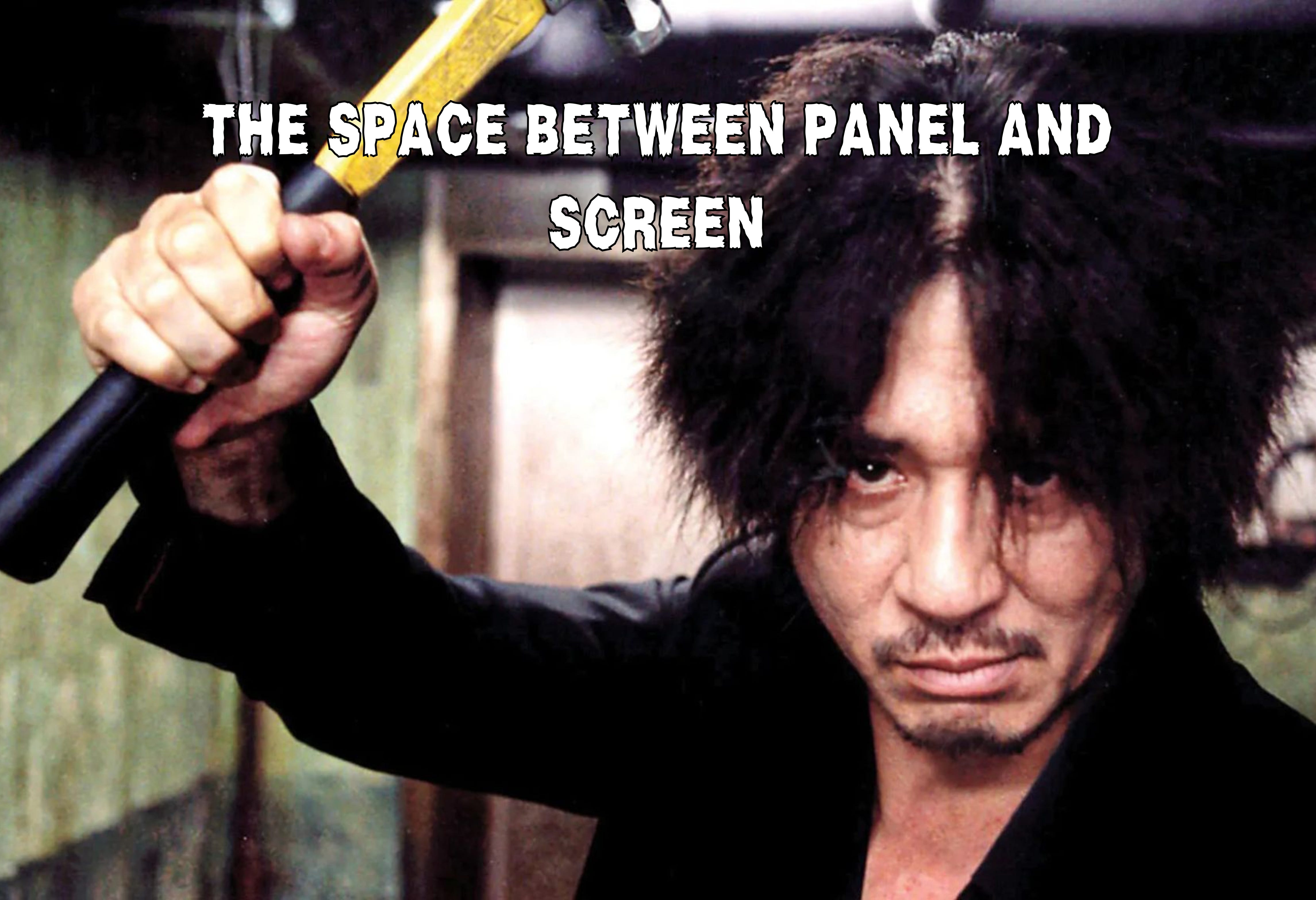
I was planning to do a review of Brian De Palma’s ‘American Giallo’ trilogy, but I couldn’t get a hold of a copy of Body Double to rewatch so I’m putting that one on hold for now. Which has thrown a bit of a spanner in the works because now I don’t really have anything to write about and I really want to post something to honour my commitment to posting weekly.
The self-imposed weekly schedule is as much about keeping my eye in as anything else. I run this stack for myself as much as I do for the reader—that’s not to say I don’t appreciate those of you who read my words and who bother to comment and interact with me. I really do appreciate you. But writing is like muscle memory—use it or lose it!
In fitness, there is a saying that was coined, I believe, by Russian kettlebell guru, Pavel Tsatsouline; Grease the Groove. That means to practice a movement pattern, Skill or exercise with enough frequency to maintain or even develop that motion. For example, if you do a couple of pull-ups every time you walk past the pull-up bar you will improve your pull-ups a lot more efficiently than if you hardly ever do pull-ups. If you spend long periods of a day sitting in a chair and never squat to depth you will lose that range of motion. It’s not so much that you are getting old, it’s that you are getting weak! Use it or lose it!
So, that is why I write these weekly articles, to grease the writing groove, to exercise my brain and maintain or develop my finger to eye coordination. I also find it quite therapeutic, writing about things that I am passionate about, that have little or nothing to do with my work and, just that writing is kind of a happy place for me. Maybe it’s a form of superficial escapism that delivers a false sense of achievement—or even procrastination—but it makes me feel good about myself, almost as much as smashing out a 30-minute kettlebell circuit every day feels fulfilling.
Anyway, now that my irrelevant preamble is out of the way, all this talk of motion got me thinking about the differences between action in films and action in comics. So, let’s talk about it.
Action in Space and Time
Last week I read the Garth Ennis penned James Bond: Your Cold, Cold Heart, from Dynamite Entertainment. It was a fun romp, read a little like a loving parody of the Bond films. It ramped up the violence a lot compared with the films, and this got me thinking about what works in comics and what works in films.
The obvious distinction, beyond the moving pictures in film is, of course, sound. Comics cannot use sound or music to create atmosphere or tension in the way that films can. But there’s something else to think about where action is concerned. In film action takes place in time where-as, in comics, action takes place in space—no, not outer space—the geometric kind of space, specifically two-dimensional space.
In film, the director controls everything about your experience, where your eye goes, how long for and at what rhythm. The hallway fight scene in the classic Korean film Oldboy is a great example of this—filmed in a single take, the scene feels almost first person, like you are there, in the moment. The truck chase scene in Raiders of the Lost Ark is a series of takes and fast edits that build tension and excitement throughout. In those two, very different, examples the whole experience is influenced by a variety of factors that work together; sound design, score, cutting speed, and camera movement, all produce a psychological response from the viewer and draws you in to the action.
Comics have to do things a little differently and, this relies heavily on the skill of the artist to get it right. There’s no sound here, no movement or set duration yet, when done well, can feel extremely visceral and, in some cases, more relatable than in film. Perhaps because it requires a little more suspension of disbelief and a little work on your behalf to use your imagination to fill those gaps, making you an active participant rather than an observer.
Although I haven’t read any of those classic American comics, I can admit that Jack Kirby was possibly the architect of how to do action in comics correctly, certainly in western comics. There’s a kinetic energy and sense of motion on the page in his action sequences that has informed almost every comic artist since. Manga artists have since developed a style that is almost unparalleled in conveying movement and action that almost animate their pages.
Where films can use editing and framing to emphasise movement or create urgency, comics have to rely on panel layout with the big moments often being delivered on a splash page that is almost a freeze-frame of the action.
Pros and Cons
When these moments are delivered well you feel them in your heart and in your gut. When they are not done well, they make you feel nothing and you quickly lose interest. I often feel this way when action scenes in films are almost entirely CG rendered. It’s just pixels floating on a screen, often defying the laws of physics in a way that I simply cannot abide. The Avengers films might be expensive and popular, but they fail miserably compared with the tangible thrill of those classic Jackie Chan movies, where every single moment was meticulously choreographed, every fist strike, every death-defying leap is felt by the viewer.
A mistake that many films make, that has always irked me, is when the protagonist takes an immeasurable amount of damage but keeps going. Where’s the elevation of risk, the sense of peril? At least John McClain in Die Hard bled and felt pain!
When action scenes are poorly filmed, they often overload your senses, too big, too fast, too loud, too fuzzy! Michael Bay’s Transformers movies are a classic example of this.
Length and rhythm really matter. I mentioned that hallway scene from Oldboy. It lasts about 3 minutes but is the single most memorable sequence in the entire film. Mad Max: Fury Road on the other hand—yes, I know this is a contentious take—is basically a two-hour car chase, with no story, where each action moment blurs into the next and leaves you feeling numb. The action scenes, although well shot, with great stunt work, just feel so unrelenting that instead of overwhelming you with emotion you become emotionally detached, numb!
Comics have their own issues. If an artist relies too heavily on character references, their panels can appear static and uninteresting. If they use this in action scenes, the main figure may appear too posed and too static, which sucks all the energy out of the image.
The panel layout matters a lot, if the reader’s eye doesn’t follow the flow of the action naturally it breaks the tempo entirely.
Splash pages are a great tool for dramatic effect, but overuse of them is irksome and can completely derail the action by stopping the motion entirely.
Something that is often used in American superhero comics is dialogue mid fight. If the characters are waffling on to each other, dumping a bunch of unnecessary exposition on the reader, it takes away from the movement and action on the page. Currently, the best artist at illustrating fight sequences in comics (in my opinion) is Daniel Warren Johnson, who also writes his own comics and he is very good at separating the emotional dialogue moments from the kinetic action moments. But, Stan Lee, for example, loved a verbose exposition dump mid-fight—which is probably one of the many reasons I never liked his comics.
Final Word
I think the takeaway here, is that comics are not film, and film is not comics. These days, too many comics are being created as a pitch deck for a film or TV show, or with TV adaptations in mind. Comics are comics and need to be created with that in mind. What works in comics, doesn’t necessarily work on film, and vice versa. This is why so many movie adaptations of comics look very different to the comics they were inspired by, which is fine. They’re different mediums and require a different approach.
Perhaps, the deepest similarity between the two mediums, where action is concerned, is emotion. For the action to work, it needs to elicit an emotional reaction in the reader/viewer, which requires a sense of participation to be drawn into the action but then for you to surrender to those feelings in order to emote. Get it wrong, and you leave the reader/viewer feeling empty and unfulfilled.
For example, if you were to render the hallway fight from Oldboy in a comic, it wouldn’t need any dialogue. The whole fight could take place on a single page, with a series of silent panels from different angles, zooming in and out to convey motion and progression. The shot afterwards, in the elevator, would be a splash page, delivered like a punchline.
Delivering great action is a fine balancing act. Get it right and you thrill your audience. Get it wrong and you risk losing your audience entirely.
What about you? Do you agree with me? Am I missing the point or have I left out important nuance? Let me know in the comments.
Troy
I love Body Double! That music video in the middle of it is pure gold.
I’d have to dig out my copy of the Manga Oldboy, that the film is based on, but from memory, there is very little dialogue