
NOSTALGIA: A DOUBLE EDGED SWORD
From positivity to pathology

Currently I’m watching two TV series that evoke feelings of nostalgia for bygone eras, but they do so in very different ways. One presents the past in a mostly positive light, while the other highlights that the mythical “golden age” might not have been quite as gold-gilded as we like to tell ourselves.
Stranger Things has always leaned heavily into 80s nostalgia, presumably because that was when its creators — the Duffer Brothers — grew up. Every season contains call-backs to the films, music and TV of the time: from the E.T.-evoking kids on bikes, to the heavy use of The Clash’s “Should I Stay or Should I Go” in season one, to season four’s resurrection of Kate Bush’s “Running Up That Hill”. Not to mention the nods to classic horror and sci-fi films. But at times it feels as though the Duffers had only ever seen E.T., The Goonies and Pretty in Pink — and I can categorically say that not everything in the 80s was day-glow pink and neon lights. There were plenty of greys and browns too. It is, certainly, a very rose-tinted version of the past.
By contrast, IT: Welcome to Derry shows a very different side to 1950s America than the one we were given in Back to the Future. Yes, we get the kids-on-bikes trope, but we also see an America struggling with its post-war identity and — in what might be considered a reflection of current tensions in American politics — a deeply divided country rife with racial prejudice. I mean, yes, there’s also a psychotic supernatural clown, but that barely seems like the main point of the series.
So, I thought I’d take a little dive into what nostalgia actually is, what the pros and cons of it are, and then look at some nostalgic moments from popular media and contrast them with some realities of the eras they depict — to show that this reactionary harking back to a self-edited “golden age” is, frankly, bollocks.
What is Nostalgia?
Before discussing the pros and cons of nostalgia, I’ll do my due diligence, because there’s nothing worse than expressing an opinion without first establishing the facts. Over to you, Wikipedia:
“Nostalgia is sentimental longing for the past, typically for a period or place with happy personal associations. The word nostalgia is a neoclassical compound derived from Greek, consisting of νόστος (nóstos), a Homeric word meaning ‘homecoming’, and ἄλγος (álgos), meaning ‘pain’; the word was coined by a 17th-century medical student to describe the anxieties displayed by Swiss mercenaries fighting away from home. Described as a medical condition — a form of melancholy — in the early modern period, it became an important trope in Romanticism.”
Clearly our understanding of nostalgia has changed somewhat from its beginnings, but keep that line about it being a form of melancholy in mind for now.
Yes, nostalgia can be a self-soothing mechanism that helps with stress or loneliness, or simply give you a short-term dopamine hit — like how most of us felt watching that scene in Rogue One where Darth Vader rampages through the Rebel craft, Force-choking motherfuckers left, right, and centre, like the badass we had always wanted to see. Or when you hear the song that was playing when you had your first kiss at the school disco. It can help us construct our self-identity by making us reflect on the past in ways that reinforce who we are now.
The Good
According to research, nostalgia can provide positive intrapersonal psychological effects and a sense of connectedness with others (1). We often gravitate towards people with similar worldviews and life experiences, and sharing past events with like-minded people can be extremely fulfilling. For example, I recall, as a toddler, listening to my grandad and great-uncles sitting around with a glass of whisky, regaling each other with their personal war stories in what must have felt as much like a therapy session for them as it was a history lesson for me.
Now, obviously most of us aren’t unfortunate enough to have been forced to fight in a world war for the profit of a few aristocratic psychopaths, but we all have stories of falling off a bike, getting a fat lip from a school bully, or getting kneed in the groin by the girl you had a crush on (or is that just me?).
We also love to talk about our favourite films or TV shows from when we were growing up. Some of us like to relive our childhoods by paying far too much money to see a bunch of geriatric pop stars badly singing on stage. In my case that’s Iron Maiden and not the fecking Spice Girls! But I won’t judge you for your past self having a questionable taste in music. If you’re sceptical, just look at the wave of positivity that temporarily swept the UK earlier this year after the Oasis reunion tour was announced.
So, there are definitely positives to be found in reflecting on the past — as long as you do it in a way that reinforces your present and connects you to yourself and your social groups, rather than using it to escape or withdraw.
The Bad
Although using nostalgia to reflect on the past can foster resilience, some people use it to escape from the present — and that’s not good. Retreating into nostalgia to avoid responsibility, conflict or personal growth might be a one-way path to depression.
The reactionary tendency to escape to an idealised golden age (which is a classic tactic of conservative politicians who use faux nostalgia to reinforce their rhetoric and manipulate certain people into identifying with their twisted, cruel and hateful policies) can, on a personal level, lead you to think: “I’ll never be as happy as I was then.” Instead of being an emotional anchor that builds resilience, nostalgia becomes a crutch that paralyses you in a state of anxiety or melancholy.
There are occasions when too much nostalgia can become pathological, but I’m not here to do psychoanalysis, and I do want this to be an entertaining read, so let me just end this section with a warning.
Nostalgia can be a positive thing that makes you feel good and fosters relationships. But too much of it can prevent you from progressing in the present moment and can even intensify feelings of dissatisfaction or resentment towards anything or anyone who isn’t like you — because they read manga not Marvel, or they listen to Bad Bunny not The Specials. Or because they think The Last Jedi is better than The Empire Strikes Back… okay, some people are beyond help.
The Deception of Nostalgic Thinking
In an attempt to clarify the difference between positive and negative nostalgia, I’m going to list a few things from popular media that make me feel good when I look back on them. But to prove that this mythical “golden age” is nothing more than a pipe dream, I’ll contrast those positive memories with some harsh truths about their era.
1. 1977: Star Wars
Before it was called A New Hope, George Lucas’s Star Wars was a global cultural phenomenon. Not only was it a great film (not perfect, but good enough) that revolutionised science-fiction cinema and redefined what blockbuster movies could achieve — I’m sure I don’t need to tell you that — but, as much of a dopamine hit as I get whenever I hear that opening fanfare or see an X-Wing fighter, I am under no illusion that 1977 represented some kind of utopian past.
Here are a few reminders:
It was only two years earlier, in 1975, that UK law finally made it possible for women to buy property without a male co-signee. Golden age, my arse.
In 1977, South African anti-apartheid activist Steve Biko died in police custody, effectively murdered by the state.
The Battle of Lewisham saw 500 ultra–far-right National Front members march through London. The police chose to kettle the anti-fascist protestors and protect the racist mob (2).
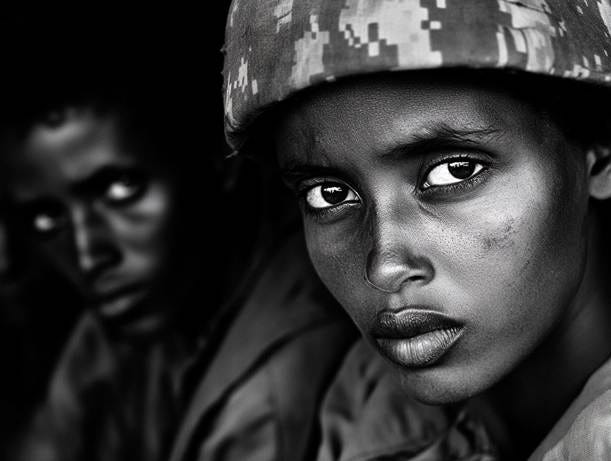
The Ogaden War (3) between Somalia and Ethiopia erupted, resulting in more than 25,000 civilian deaths and over 500,000 displaced Somalis.
2. 1982: Judge Dredd: The Apocalypse War
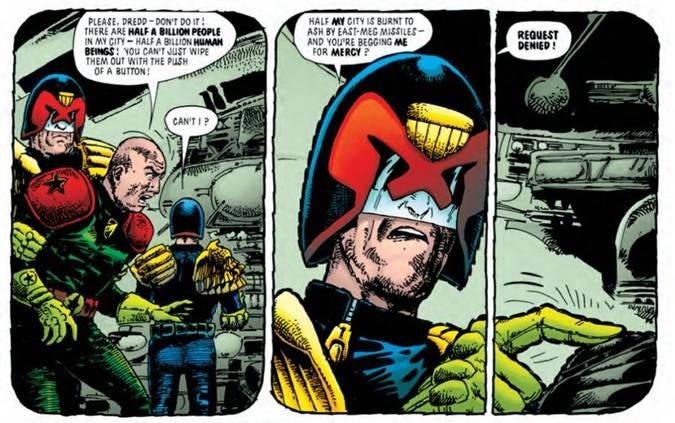
Recognised by most 2000 AD fans as one of — if not the — greatest Dredd mega-epics, The Apocalypse War begins when a Sov Block invasion fleet, led by War Marshal Kazan, attacks Mega-City One. Judge Dredd is forced to fight an insurgent counter-offensive, ultimately resulting in the retaliatory annihilation of East-Meg One. Written by John Wagner and featuring the much-anticipated return of co-creator Carlos Ezquerra on art duties, The Apocalypse War is everything that makes Dredd great: edgy, satirical, at times hilarious, but always deeply cynical.
Here’s what else was happening in 1982:
1982 was the year British PM Margaret Thatcher refused to diplomatically resolve a land dispute with Argentina over the Falkland Islands, resulting in the bloodiest war in modern British history — notable also for the fact that Andrew Mountbatten-Windsor served as a helicopter pilot aboard HMS Invincible and was alleged to be there when it was struck by torpedoes—ironic given that torpedo rhymes with…
On 15 September, Israeli forces entered West Beirut, marking a significant escalation in the 1982 Lebanon War.
Between 16 and 18 September, Lebanese Christian Phalangist militias, supported by Israeli forces, massacred between 1,300 and 3,500 Palestinian and Lebanese Shia civilians in the Sabra and Shatila refugee camps in Beirut.
3. 1991: Nirvana’s Nevermind
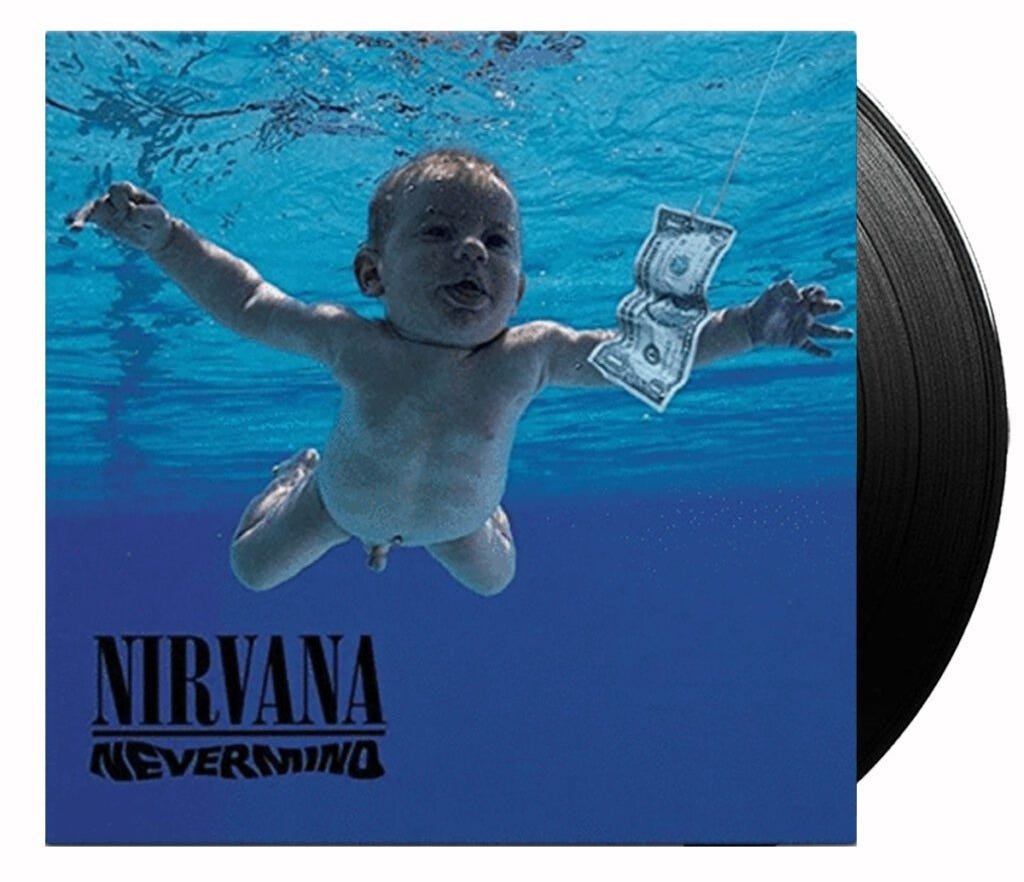
Not the album that launched the so-called grunge scene of alternative rock, but certainly the album that changed everything from a commercial standpoint. Suddenly hair metal was out, tight jeans and denim jackets were replaced by baggy shorts and plaid shirts, and for me, this was the album that became a gateway to a whole host of musicians and genres I had previously not entertained.
Here’s what else was happening at the time:
In the UK, the House of Lords ruled that marital rape was now a crime (R v R [1991] UKHL 12). Imagine existing as a nation for 2,000 years (4) and only then deciding that raping your wife should be considered a criminal act!
The First Gulf War began after President George Bush Snr decided he wanted all the oil.
An unarmed Rodney King was caught on camera being brutally beaten by L.A. police — an act that led directly to the devastating L.A. riots.
In March, the Sierra Leone Civil War began when the Revolutionary United Front (RUF) launched an attack from neighbouring Liberia. It lasted eleven years and resulted in around 70,000 casualties.
A Bit of Levity
Okay, so I’ve depressed the hell out of you. I just wanted to hammer home the point that no matter how much better you think the world was way back when, it really wasn’t. The human race has always been a total shit-stain on planet Earth.
Nostalgia can be a very positive thing that gives you a warm feeling inside. But please don’t be the kind of grumpy old twat who refuses to accept anything modern or new. Honestly, there are some great new films, music and comics around right now — but if you sit around grumbling about how much better things were in “your day”, you’ll miss all the wonderful new stuff that’s happening right now, in this moment.
Surely you don’t want to turn into Quentin Tarantino — the maverick young movie auteur who became a curmudgeonly old c*** moaning about everything new or different.
Sure, you can still enjoy all your Silver Age superhero comics, but do yourself a favour and pick up a new manga. You might be surprised — and you get to learn a new skill by reading right to left.
You can still consider London Calling by The Clash the greatest album ever, but don’t ignore modern post-punk revolutionaries like Amyl and The Sniffers or Lambrini Girls!
Also, the 1980s had crap video games, racist comedians on mainstream telly, and SodaStreams… if you ever wanted proof that the past was just as shite as today, there it is!
No matter how hard you try, you will never be 10-years old again so embrace the present.
Troy
References:
Juhl, J. and Biskas, M. (2023) ‘Nostalgia: An impactful social emotion’, Current Opinion in Psychology, 49, p. 101545. doi:10.1016/j.copsyc.2022.101545.
Wikipedia contributors. “Battle of Lewisham.” Wikipedia, The Free Encyclopedia. Wikipedia, The Free Encyclopedia, 28 Nov. 2025. Web. 9 Dec. 2025.
Wikipedia contributors. “Ogaden War.” Wikipedia, The Free Encyclopedia. Wikipedia, The Free Encyclopedia, 9 Dec. 2025. Web. 9 Dec. 2025.
Wikipedia contributors. “Formation of the United Kingdom.” Wikipedia, The Free Encyclopedia. Wikipedia, The Free Encyclopedia, 6 Jun. 2025. Web. 9 Dec. 2025.
I think Americans have a far different view of the 80s from us brits. To me the 80s was all about Strikes, riots and the brutality of thatcher’s regime, where the US movies and shows always portray a world of excess and large mobile phones
Interesting stuff, thank you.
I think what people are really nostalgic for is viewing the world with the naivety, energy and simplicity of a child .
As Dan says, in terms of your own nostalgia it doesn’t really matter about this riot or that law, because your world as a child didn’t encompass that. Your concerns were childish and therefore more immediate and personal.
One interesting fact I learnt about nostalgia is that you can feel very nostalgic for things that simply didn’t happen. Someone presented a paper on it at an academic conference I attended. It was quite clever, because to illustrate his point he made us feel very nostalgic about something that had happened in the sixties and only at the end of the paper did he reveal he’d made the whole thing up!
I think most people had very mixed childhoods. Good and bad. Fear and joy. There’s a lot of fun to be had enjoying and celebrating the good memories as long as you keep it all in context.